Once, the world was a mass of swirling darkness. There was no heaven. There was no earth. All the forces of the universe were trapped inside a small egg, tumbling and spinning in utter chaos.
Inside the egg was a tiny creature named Panku. He slept soundly, unbothered by the disorder around him. As he slept, Panku grew, and the egg also grew around him. For eighteen thousand years Panku slumbered peacefully, until he had developed into a well-formed, muscular giant whose body spanned ninety thousand li (about thirty thousand miles).
In perfect harmony with Panku’s body, the eggshell also stretched, straining to hold both the expanding giant and the turbulent gases of the world inside its boundaries.
One day when the universe was especially unstable, Panku woke up. All around, he saw nothing but darkness and confusion. At first, he was intrigued by the irregular rhythms of the world. He watched, fascinated, as whirling particles burst and scattered around him. Quickly, he learned to dodge exploding gases by nimbly jumping from side to side.
Showing posts with label chinese mythology. Show all posts
Nuwa Creates People
The world was indeed a sparkling jewel. Sturdy pine trees dotted the mountains, and weeping willows lined the streams. Apple, quince, and plum blossoms burst into bloom and later yielded ripe, heavy fruit.
Birds flitted about in the azure sky, leaving their black, crimson, and iridescent green feathers drifting in the wind. Silverfish and carp splashed gleefully in the waterways. Fierce beasts like tigers and gentle creatures like deer roamed with equal abandon across the rocky hills.
Nuwa, a goddess, stumbled accidentally upon this vibrant world during her travels. The earth was humming and teeming with life. She marveled at its many wondrous creatures. Everywhere she looked, she found a creature more marvelous than the one before.
She saw every type of fur and fin, feather and scale, horn, hoof, and stinger. Creatures lumbered, crawled, and slithered upon the earth. They jumped, darted, and roiled in the sea. Scented flowers like jasmine, hyacinth, and narcissus wrapped the entire world in their warm, strong perfume.
Birds flitted about in the azure sky, leaving their black, crimson, and iridescent green feathers drifting in the wind. Silverfish and carp splashed gleefully in the waterways. Fierce beasts like tigers and gentle creatures like deer roamed with equal abandon across the rocky hills.
Nuwa, a goddess, stumbled accidentally upon this vibrant world during her travels. The earth was humming and teeming with life. She marveled at its many wondrous creatures. Everywhere she looked, she found a creature more marvelous than the one before.
She saw every type of fur and fin, feather and scale, horn, hoof, and stinger. Creatures lumbered, crawled, and slithered upon the earth. They jumped, darted, and roiled in the sea. Scented flowers like jasmine, hyacinth, and narcissus wrapped the entire world in their warm, strong perfume.
Fushi Teaches The People
Fushi watched the new humans stumbling about. These people did not have the supernatural powers of gods, the strength of tigers, or the speed of leopards. They did not have the protective armor of turtles, the leathery hide of water buffaloes, or the thick fur of foxes.
People had thin skin, soft flesh, sparse hair, and moved about rather slowly. They had good hearts and cheerful laughter, but they were easily frightened and discouraged. Fushi decided to help the new humans.
First, Fushi taught people how to twist plant fibers together to form ropes of all widths and lengths. With the thinner ropes, he wove fishing lines and nets so people could plunge the water’s depths to find food.
With the thicker ropes, he braided strong bridges, then strung them across high chasms so people could cross from one mountain peak to another in search of food.
People had thin skin, soft flesh, sparse hair, and moved about rather slowly. They had good hearts and cheerful laughter, but they were easily frightened and discouraged. Fushi decided to help the new humans.
First, Fushi taught people how to twist plant fibers together to form ropes of all widths and lengths. With the thinner ropes, he wove fishing lines and nets so people could plunge the water’s depths to find food.
With the thicker ropes, he braided strong bridges, then strung them across high chasms so people could cross from one mountain peak to another in search of food.
Water War
Gong the water god pummeled the world with incessant bouts of rain and floods. The deluges battered homes into piles of rubbish, and they toppled ancient trees.
Great mountains crumbled and crashed into the swelling muddy rivers. Gong showed no mercy as thousands of people and animals perished on the soggy, bloated earth.
The other gods avoided Gong because his fury was so intense. They watched silently as their moats, villages, and temples were destroyed, one by one.
Finally, Zurong, the fire god, decided that Gong had gone too far. Zurong was irritated by the other gods’ cowardice, and he did not approve of his successor’s plans to reshape the earth into water-heavy proportions.
Great mountains crumbled and crashed into the swelling muddy rivers. Gong showed no mercy as thousands of people and animals perished on the soggy, bloated earth.
The other gods avoided Gong because his fury was so intense. They watched silently as their moats, villages, and temples were destroyed, one by one.
Finally, Zurong, the fire god, decided that Gong had gone too far. Zurong was irritated by the other gods’ cowardice, and he did not approve of his successor’s plans to reshape the earth into water-heavy proportions.
Yu Rebuilds The Earth
The ruling king in this story is the Yellow Emperor, a good leader who struggled with the mighty rivers that flooded the country each year.
According to ancient myths, the Yellow Emperor had a pile of magic dirt that could absorb water. His grandson Kun stole the magic earth and dropped little balls of dirt wherever he went.
The dirtballs swelled into huge, fertile mounds of soil as they absorbed water.
The peasants then scooped up the fertile soil and spread it over their sopping fields. Kun also built dams to control the flooding of the country’s unpredictable rivers.
Unfortunately, the dams often burst and reflooded the land. When the emperor found out about the theft, he was furious and sent Zurong the fire god, now the chief executioner, to track down and kill his grandson Kun. Zurong chased Kun to the ice glaciers of the arctic and struck him dead with a flaming sword. Kun’s body lay trapped and frozen in the ice.
According to ancient myths, the Yellow Emperor had a pile of magic dirt that could absorb water. His grandson Kun stole the magic earth and dropped little balls of dirt wherever he went.
The dirtballs swelled into huge, fertile mounds of soil as they absorbed water.
The peasants then scooped up the fertile soil and spread it over their sopping fields. Kun also built dams to control the flooding of the country’s unpredictable rivers.
Unfortunately, the dams often burst and reflooded the land. When the emperor found out about the theft, he was furious and sent Zurong the fire god, now the chief executioner, to track down and kill his grandson Kun. Zurong chased Kun to the ice glaciers of the arctic and struck him dead with a flaming sword. Kun’s body lay trapped and frozen in the ice.
The Grand Archer Yi
China was once thought to be surrounded by four seas. To the east was a vast ocean. Beyond the ocean, magnificent plants bloomed on an island paradise.
The most glorious specimen of all the plant life was the Fusang tree, whose wondrous branches stretched up toward the heavens and out across the island for hundreds of miles.
Scattered among its masses of dark green foliage, fragrant hibiscus flowers burst into flaming shades of magenta, crimson, and violet.
Among the glossy leaves of the Fusang tree lived ten naughty suns. They were left alone to play in paradise, neglected by their parents, the sun god Dijun and the sun goddess Shiho. Each day, Shiho left heaven in a pearl-shell chariot drawn by six fiery young dragons and passed by the Fusang tree.
The most glorious specimen of all the plant life was the Fusang tree, whose wondrous branches stretched up toward the heavens and out across the island for hundreds of miles.
Scattered among its masses of dark green foliage, fragrant hibiscus flowers burst into flaming shades of magenta, crimson, and violet.
Among the glossy leaves of the Fusang tree lived ten naughty suns. They were left alone to play in paradise, neglected by their parents, the sun god Dijun and the sun goddess Shiho. Each day, Shiho left heaven in a pearl-shell chariot drawn by six fiery young dragons and passed by the Fusang tree.
The Moon Goddess
Because he loved his wife very much, the Grand Archer Yi reluctantly set out on a journey to the Kunlun Mountains where the peaches of long life were grown by Hsi Wang Mu, the Queen Mother of the Western Paradise. The Archer was unsure of the road, and even less sure of how much strength he had left.
When he lived in heaven, Yi had always ridden in the empress’s chariot or straddled the tails of sky dragons to reach the Western Paradise, but now that he lived on earth, he had to walk.
He crossed burning deserts, forded cold streams, and trekked over high mountains for thousands of miles.
Finally, Yi arrived at his destination and was greeted by Hsi Wang Mu. When Yi told her that his wife wanted a dosage of the elixir of immortality, Hsi Wang Mu could only sigh.
Unfortunately, she told Yi, the gods and goddesses had just feasted on the last batch of peaches. The next peach crop would not ripen for another three thousand years.
When he lived in heaven, Yi had always ridden in the empress’s chariot or straddled the tails of sky dragons to reach the Western Paradise, but now that he lived on earth, he had to walk.
He crossed burning deserts, forded cold streams, and trekked over high mountains for thousands of miles.
Finally, Yi arrived at his destination and was greeted by Hsi Wang Mu. When Yi told her that his wife wanted a dosage of the elixir of immortality, Hsi Wang Mu could only sigh.
Unfortunately, she told Yi, the gods and goddesses had just feasted on the last batch of peaches. The next peach crop would not ripen for another three thousand years.
The Unicorn's Prophecy
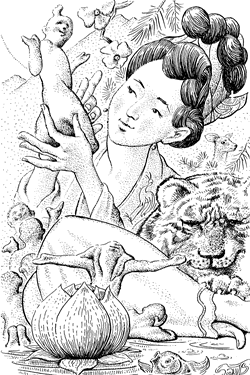
Once there was a very kind woman named Cheng who lived in Shandong province in north western China.
Loved and respected by everyone, she longed desperately for a child. Night and day, she prayed for a son.
However, her husband scolded her for wanting another mouth to feed. Once he had been a nobleman, but he had lost all his money.
Afterward, all his old friends avoided him and he became deeply ashamed of his poverty. Luckily, Cheng was willing to marry him.
One day, Cheng undertook a long journey to a remote temple to pray for a child. Her husband angrily refused to accompany her. The villagers all admired her bravery for attempting the journey to such an isolated place.
Loved and respected by everyone, she longed desperately for a child. Night and day, she prayed for a son.
However, her husband scolded her for wanting another mouth to feed. Once he had been a nobleman, but he had lost all his money.
Afterward, all his old friends avoided him and he became deeply ashamed of his poverty. Luckily, Cheng was willing to marry him.
One day, Cheng undertook a long journey to a remote temple to pray for a child. Her husband angrily refused to accompany her. The villagers all admired her bravery for attempting the journey to such an isolated place.
Monkey
On the Mountain of Fruit and Flowers, a magic rock gave birth to a stone egg. From this stone egg emerged a monkey whose first act was to jump up and bow to the four directions. His eyes flashed like lightning, and his teeth glinted like the stars at night.
He played with other monkeys and with wolves, tigers, and deer, but he had an enormous appetite and often gobbled up their share of grass, leaves, berries, and fruit. Still, his joyful personality and curious nature made him the most popular animal on the mountain.
One day, Monkey jumped through the waters of a cascading waterfall and discovered behind it a cave furnished with stone bowls, cups, and chairs. Delighted, Monkey called all the other monkeys to come see the novelties he had found.
When they arrived, the other monkeys grabbed the utensils, made themselves comfortable in the cave, and proclaimed Monkey their king. Amidst the wild orchids and aromatic herbs growing in the mountains, the monkeys lived in perfect happiness for centuries.
He played with other monkeys and with wolves, tigers, and deer, but he had an enormous appetite and often gobbled up their share of grass, leaves, berries, and fruit. Still, his joyful personality and curious nature made him the most popular animal on the mountain.
One day, Monkey jumped through the waters of a cascading waterfall and discovered behind it a cave furnished with stone bowls, cups, and chairs. Delighted, Monkey called all the other monkeys to come see the novelties he had found.
When they arrived, the other monkeys grabbed the utensils, made themselves comfortable in the cave, and proclaimed Monkey their king. Amidst the wild orchids and aromatic herbs growing in the mountains, the monkeys lived in perfect happiness for centuries.
The Pilgrimage
After Monkey outlasted the axes, sticks, swords, and lances of the gods, he boldly announced his plan to depose the Jade Emperor, the ruler of heaven. The gods and goddesses gasped at his audacity and whispered among themselves in shocked tones.
Finally, the Buddha stepped in. All the gods in heaven listened respectfully as he commanded the deities to stop fighting with Monkey.
Then the Buddha asked Monkey why he wanted to replace the Jade Emperor. Monkey replied that his own clever magic spells and fighting ability made him superior to anyone in heaven, including the Jade Emperor.
Monkey bragged about how he could transform himself into seventy-two types of animals, plants, and rocks.
He boasted that his somersaults could take him through the clouds a hundred and eight thousand li to the end of the world. The Buddha issued Monkey a simple challenge. "Jump across my palm and heaven is yours," the Buddha said.
Finally, the Buddha stepped in. All the gods in heaven listened respectfully as he commanded the deities to stop fighting with Monkey.
Then the Buddha asked Monkey why he wanted to replace the Jade Emperor. Monkey replied that his own clever magic spells and fighting ability made him superior to anyone in heaven, including the Jade Emperor.
Monkey bragged about how he could transform himself into seventy-two types of animals, plants, and rocks.
He boasted that his somersaults could take him through the clouds a hundred and eight thousand li to the end of the world. The Buddha issued Monkey a simple challenge. "Jump across my palm and heaven is yours," the Buddha said.
Subscribe to:
Posts (Atom)